

You have explained what hurts, perhaps more than once. Your partner may even remember your words. Yet when the same thing happens again, it can seem as though the conversation never landed. Feeling unheard is often about what happens after someone listens.
Hearing the words is only the beginning
Listening involves attention to the meaning and feeling behind a message. If someone says they felt alone at a family gathering, the request may be for support rather than a detailed account of who spoke to whom. Responding only to the facts can miss the experience they are trying to share.
You do not have to agree with every interpretation to acknowledge that an experience was painful. A response such as ‘I can see why that felt lonely’ can create room for a more useful discussion of what happened and what each person needs next.
Understanding becomes visible in the next conversation, when you remember what mattered and respond with that in mind.
Why a conversation turns defensive
When we hear blame, it is easy to prepare a defence before the other person has finished. One partner then repeats the concern more strongly, and the other feels even more accused. Both may leave believing they were the one who tried to explain.
A gentler way to begin
- Describe one specific moment rather than using ‘always’ or ‘never’. A vague pattern is difficult to address in one reply.
- Say why you are bringing it up and what you hope will change.
- Ask your partner what they understood before discussing a solution.
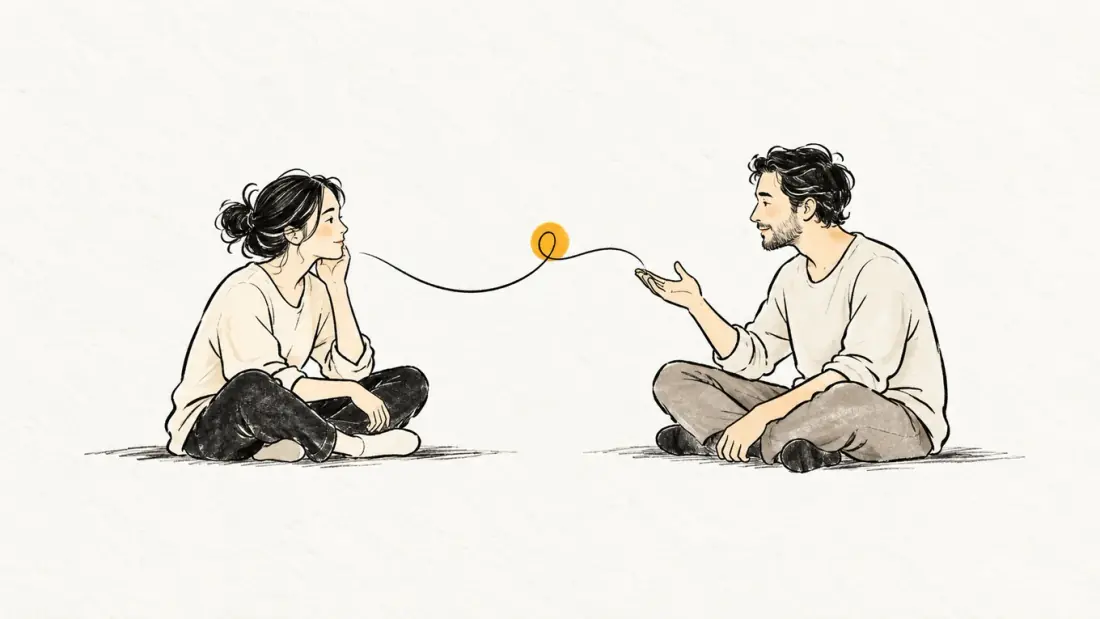
What feeling heard can look like
The goal is a conversation where both people can speak, pause and check their assumptions. Reflecting back what you heard, recognising effort and asking a question before solving are small but practical steps. They are especially valuable when the topic is sensitive.
If the same conversation keeps ending in silence or escalation, a counsellor can help you slow down the sequence and notice what each of you is trying to communicate.