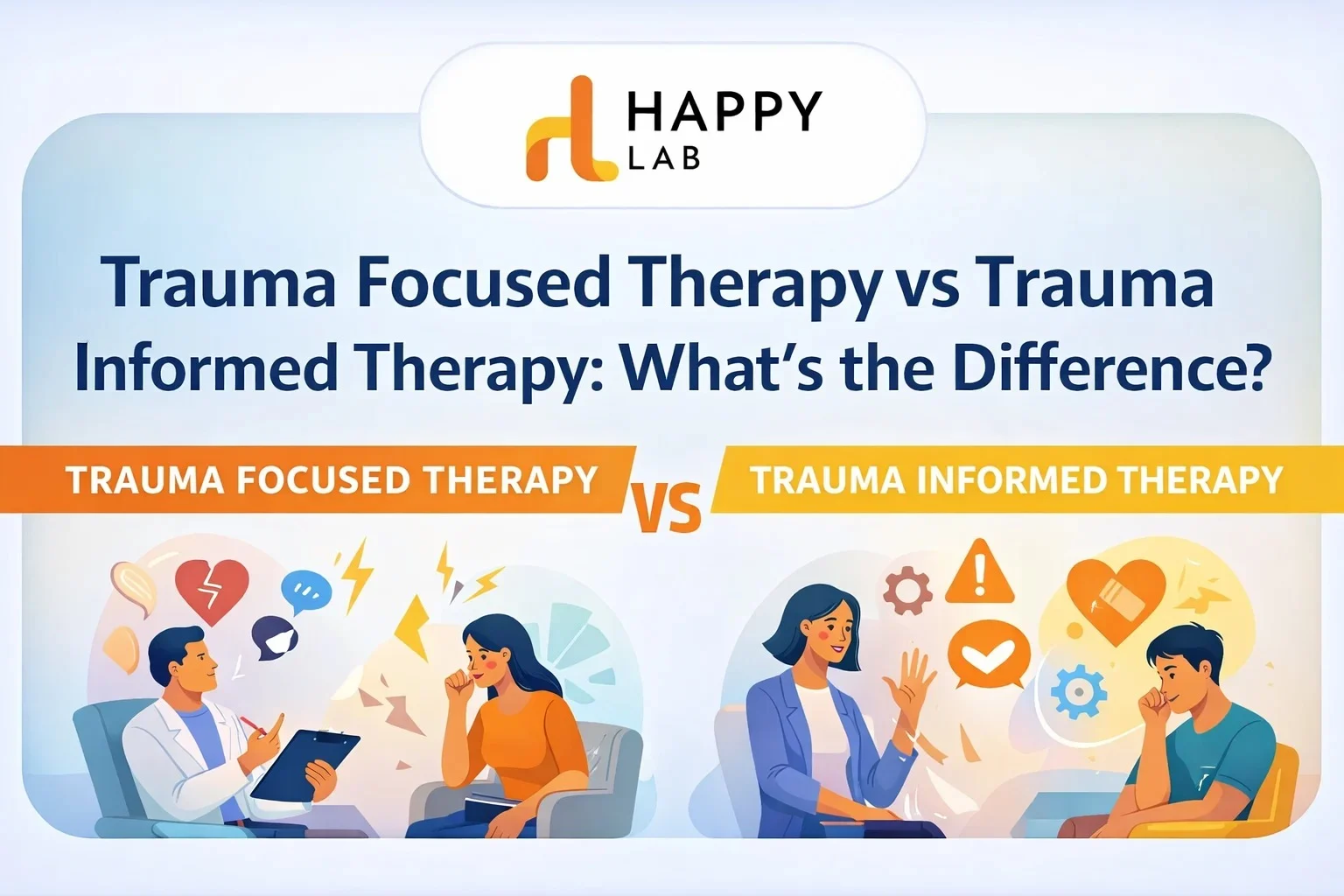
Trauma Focused Therapy vs Trauma Informed Therapy: What’s the Difference? (2026 Guide)
Did you ever wonder why some therapy sessions went into the depth of painful memories, whereas others just worked on getting you to be safe and supported?
When you are in need of assistance, such terms as trauma focused therapy and trauma informed therapy may sound confusing. They are alike- but, they differ in their work.
Let’s simplify it.
Imagine you have a deep wound. One approach treats the wound directly. The other ensures the environment is safe so it doesn’t get worse.
Both are important. But which one do you need?
In this complete 2026 guide, we’ll break down everything in simple language so you can confidently choose the right path—and discover how Happy Lab – best therapist in bangalore can support your healing journey.
What Is Trauma?
Trauma is not just about “big events.” It’s about how your mind and body respond to overwhelming experiences.
It can come from:
- Childhood neglect
- Emotional or physical abuse
- Sudden loss
- Toxic relationships
- Workplace stress
Here’s something most people don’t realize:
Trauma is subjective.
What affects one person deeply may not affect another the same way.
Think of trauma like a file your brain couldn’t properly “save.” It stays open in the background, affecting your thoughts, emotions, and behavior.
Types of Trauma Explained
Understanding trauma types helps you choose the right therapy.
1. Acute Trauma
Caused by a single event
Example: accident, assault
2. Chronic Trauma
Repeated exposure
Example: long-term abuse
3. Complex Trauma
Multiple traumatic experiences over time
Often starts in childhood
4. Secondary Trauma
Indirect exposure (common in caregivers, doctors)
Why Trauma Therapy Is Important
Ignoring trauma doesn’t mean it disappears.
Instead, it may show up as:
Anxiety or panic attacks
Overthinking
Low confidence
Emotional numbness
Relationship issues
Key Reasons to Seek Therapy
Improves emotional control
Reduces triggers and flashbacks
Builds healthier relationships
Boosts confidence and clarity
Improves overall mental health
What Is Trauma-Focused Therapy?
Trauma focused therapy is a structured approach that directly addresses traumatic memories.
It helps you:
Process painful experiences
Change negative beliefs
Reduce emotional intensity
Simple Explanation
It’s like cleaning and healing the wound directly.
This therapy is often more intense but highly effective.
Techniques Used in Trauma-Focused Therapy
1. Cognitive Behavioral Therapy (CBT)
Identifies negative thought patterns
Replaces them with healthier beliefs
2. EMDR Therapy
Uses eye movements to process trauma
Reduces emotional distress
3. Exposure Therapy
Gradual exposure to triggers
Helps reduce fear
4. Narrative Therapy
Helps you rewrite your story
Benefits of Trauma-Focused Therapy
Top Advantages
Faster trauma processing
Reduced emotional triggers
Better decision-making
Increased confidence
Long-term healing
Best For People Who:
Are ready to face their trauma
Want deep healing
Can handle emotional intensity
What Is Trauma-Informed Therapy?
Trauma informed therapy focuses on safety, trust, and emotional support rather than directly processing trauma.
Simple Explanation
It’s like creating a safe environment where healing happens naturally.
It assumes:
“This person may have trauma—so let’s not re-trigger it.”
Principles of Trauma-Informed Care
Core Principles
Safety – Emotional and physical
Trust – Transparency in therapy
Choice – You control the process
Collaboration – Equal partnership
Empowerment – Focus on strengths
Benefits of Trauma-Informed Therapy
Key Benefits
Builds emotional safety
Reduces anxiety
Improves trust
Encourages gradual healing
Suitable for sensitive individuals
Best For People Who:
Feel overwhelmed easily
Are not ready to revisit trauma
Have trust issues
Key Differences
Feature | Trauma-Focused Therapy | Trauma-Informed Therapy |
Approach | Direct healing | Supportive care |
Focus | Past trauma | Present safety |
Intensity | High | Gentle |
Goal | Process trauma | Prevent re-trauma |
Speed | Faster results | Gradual healing |
Which Therapy Should You Choose?
Ask yourself:
Do I feel emotionally ready?
Do I get triggered easily?
Do I need safety first?
Choose Trauma-Focused Therapy If:
You want faster results
You’re ready to face painful memories
Choose Trauma-Informed Therapy If:
You feel overwhelmed
You need emotional stability
Pro Tip: Many therapists combine both approaches for best results.
Signs You Need Trauma Therapy
Common Signs
Flashbacks
Emotional numbness
Anxiety or panic
Avoidance behavior
Difficulty trusting people
Physical Signs
Fatigue
Sleep issues
Body tension
What to Expect in Therapy Sessions
Let’s be real—therapy is not always easy.
In the Beginning:
Talking about your experiences
Building trust
In the Middle:
Facing difficult emotions
Learning coping tools
Later Stages:
Feeling lighter
Gaining clarity
Emotional stability
Common Myths About Trauma Therapy
Myth 1: Therapy is only for “serious problems”
❌ Truth: Everyone can benefit
Myth 2: You must talk about everything immediately
❌ Truth: Therapy happens at your pace
Myth 3: Therapy is a quick fix
❌ Truth: Healing takes time
Why Choose Happy Lab – Counselling Therapy in India
If you’re looking for professional support, Happy Lab – counselling therapy in india is one of the best options available today.
Why Happy Lab Stands Out
1. Expert Therapists
Specialized in trauma focused therapy and trauma informed therapy
2. Personalized Treatment Plans
Tailored to your emotional needs
3. Safe & Confidential Environment
Judgment-free support
4. Online & Accessible
Therapy from anywhere in India
5. Affordable Pricing
Quality mental health care at reasonable cost
Conclusion
Healing from trauma is not about rushing—it’s about choosing the right path.
Key Takeaways
- Trauma focused therapy = Direct healing
- Trauma informed therapy = Safe environment
- Both approaches are powerful in their own way
Action Steps You Can Take Today
- Identify your emotional readiness
- Understand your triggers
- Choose the right therapy approach
- Seek professional help
- Stay consistent in your healing journey
Why Happy Lab Is the Right Choice
If you’re serious about healing, here’s why you should consider Happy Lab – counselling therapy in india:
Top Reasons to Choose
✔ Certified trauma specialists
✔ Personalized therapy sessions
✔ 100% confidential
✔ Flexible online sessions
✔ Proven results
What You Get
Emotional clarity
Reduced anxiety
Better relationships
Stronger mindset
Also Read : Online Therapy: Struggling Mentally? Try Online Therapy Today | Happy Lab
FAQ'S
What is trauma focused therapy?
It is a treatment method that processes and cures traumatic events directly.
What is trauma informed therapy?
It is dedicated to the establishment of safe and supportive environment without a direct review of the trauma.
Which therapy is better?
It is subject to your level of emotional preparedness and the needs of the person.
Can both therapies be combined?
Yes, the two are combined by numerous therapists.
Where can I find the best therapist in India?
You can also visit Happy Lab – counselling therapy in india where you will get professional help and efficient treatment.