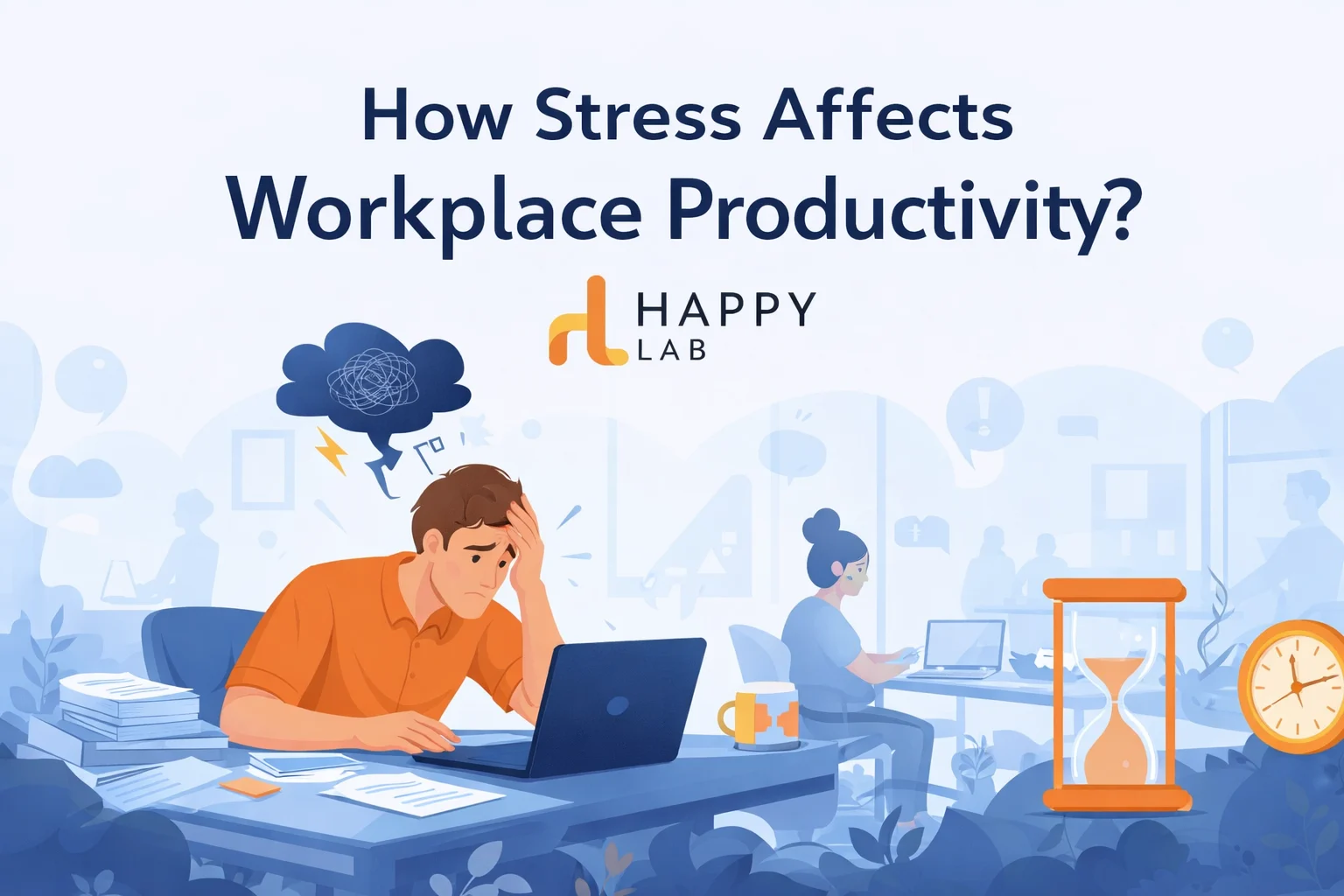
How Stress Affects Workplace Productivity (And What You Can Do About It)
Have you ever sat at your desk, stared at your screen, and felt completely stuck even though you had a long to-do list?
You’re not lazy. not incapable. likely stressed.
Stress has become the silent killer of productivity in the work place in the high paced business environment in the present day. We discuss tools, deadlines and performance measures. But seldom do we refer to the human intellect who made the work.
And here is the fact: the mind cannot give its best work when it is stressed out.
If you’re wondering how stress affects workplace productivity, or searching for how to increase workplace productivity, you’re in the right place. Let’s break this down in a simple, human way without complicated terms or corporate jargon.
What Is Workplace Stress?
Workplace stress happens when job demands exceed your ability to cope.
It can be caused by:
- Tight deadlines
- Unrealistic expectations
- Poor communication
- Job insecurity
- Long working hours
- Lack of appreciation
Think of stress like carrying a backpack. A little weight? Manageable. But if someone keeps adding bricks without warning, eventually you collapse.
That collapse often shows up as reduced workplace productivity.
The Hidden Cost of Stress at Work
Stress doesn’t just affect emotions. It affects performance.
When stress becomes constant, employees may:
- Make more mistakes
- Miss deadlines
- Avoid communication
- Lose motivation
- Feel disengaged
This directly impacts workforce productivity, especially in teams where collaboration is essential.
Companies often try to fix productivity issues with new tools or stricter rules. But if stress is the root cause, those fixes won’t work.
How Stress Impacts Brain Function
Let’s simplify the science.
When you’re stressed, your body releases cortisol the stress hormone. In small doses, it helps you respond quickly. But chronic stress does the opposite.
It affects:
- Memory
- Focus
- Creativity
- Problem-solving skills
- Decision-making
Your brain goes into survival mode. Instead of thinking clearly, it focuses on just “getting through.”
That’s why stressed employees often struggle with tasks they could normally handle easily.
Early Warning Signs Productivity Is Declining
Before productivity drops drastically, there are warning signs.
Watch for:
- Constant fatigue
- Difficulty concentrating
- Increased errors
- Irritability
- Procrastination
- Loss of enthusiasm
These signs are not personality flaws. They’re signals of stress.
If ignored, they gradually reduce both individual productivity and overall workforce productivity.
Why Productivity Is Important for Growth
You might ask, “Why productivity is important beyond meeting targets?”
For employees:
- It builds confidence
- It creates job satisfaction
- It opens doors for career growth
For organizations:
- It drives profitability
- It improves team morale
- It strengthens reputation
When productivity drops due to stress, both personal and professional growth suffer.
Stress and Workforce Productivity at Scale
Now imagine this: one stressed employee may slow down one task.
But what happens when an entire department feels overwhelmed?
The impact multiplies.
High stress levels across teams can lead to:
- Reduced collaboration
- Higher turnover rates
- Lower innovation
- Increased absenteeism
- Poor customer experience
This is how stress quietly damages workforce productivity at scale.
The Connection Between Stress and Burnout
Burnout is more than tiredness.
It’s emotional exhaustion combined with detachment from work.
Common signs:
- Feeling empty or numb
- Dreading work daily
- Cynicism toward colleagues
- Decreased performance
Burnout is the extreme result of prolonged stress. And once it sets in, recovery takes time.
Preventing burnout is essential if organizations want to understand how to increase workplace productivity sustainably.
Emotional Health and Team Dynamics
Stress spreads faster than we think.
When one team member is overwhelmed, others feel it. Tension rises. Communication weakens. Misunderstandings increase.
Healthy emotional environments encourage:
- Open dialogue
- Mutual support
- Psychological safety
Teams that feel safe perform better. It’s that simple.
Leadership’s Role in Managing Stress
Leaders influence workplace culture more than policies do.
Good leaders:
- Listen actively
- Set realistic expectations
- Offer flexibility
- Recognize achievements
- Avoid micromanaging
If you’re wondering how to increase productivity of employees, the answer often begins with empathetic leadership.
How to Increase Workplace Productivity Naturally
Instead of pushing employees harder, focus on reducing stress.
Here’s how to increase workplace productivity:
Encourage Regular Breaks
Short breaks improve focus and energy.
Set Clear Priorities
Confusion increases stress. Clarity increases performance.
Promote Work-Life Balance
Flexible schedules help employees recharge.
Normalize Mental Health Conversations
When people feel heard, they perform better.
How to Increase Productivity of Employees Without Pressure
Pressure creates short-term results. Support creates long-term growth.
To increase productivity:
- Offer growth opportunities
- Provide constructive feedback
- Celebrate small wins
- Encourage autonomy
Employees who feel valued are naturally more productive.
Practical Daily Strategies to Reduce Stress
Here are simple habits anyone can adopt:
- Deep breathing exercises
- Daily planning with top 3 priorities
- Limiting multitasking
- Short walks during breaks
- Maintaining proper sleep
These small changes significantly improve workplace productivity over time.
Creating a Mentally Healthy Workplace Culture
Culture matters.
Organizations should:
- Provide wellness programs
- Conduct stress assessments
- Offer counseling support
- Train managers in emotional intelligence
When mental health becomes a priority, workforce productivity increases naturally.
When to Seek Professional Support
Sometimes stress feels overwhelming. That’s when professional guidance helps.
Therapy can help individuals:
- Identify stress triggers
- Develop coping strategies
- Improve emotional regulation
- Rebuild confidence
Seeking support is not weakness. It’s proactive self-care.
Long-Term Solutions for Sustainable Workforce Productivity
If companies truly want to understand how to increase productivity of employees, they must think long term.
Sustainable strategies include:
- Regular mental health workshops
- Open-door communication policies
- Flexible work arrangements
- Access to professional counseling
- Recognition and reward systems
Productivity isn’t about working more hours. It’s about working with clarity and balance.
Conclusion: Prioritize Mental Health, Improve Productivity
Stress is not an individual problem but a work problem.
It influences concentration, innovation, collaboration, and eventually productivity at work. The denial of stress will cause burnout, disengagement and reduced workforce productivity.
The good news, though, is that stress can be dealt with.
With the right support in place, productivity will be enhanced automatically. Companies that invest in psychological health experience better performance and employee satisfaction.
Professional help can really help you or your staff when you are feeling stressed, or are full of life burnout, anxiety, or pressure at work.
Happy Lab Counselling Centre is a mental health support centre that is affordable and professional in India. With qualified best therapist in bangalore, Happy Lab offers safe online therapy sessions so that you can chat with an online therapy india at any place. Be it work pressure, love issues, anxiety, or depression, all you need is compassionate listening session after session.
Investing in mental health is no longer just an option, but a key to long-term success and sustainable production.
Note: the mind performs better when it is in a better state.
Also Read : How to Overcome Jealousy in Relationship?
FAQ'S
How does stress reduce workplace productivity?
Stress impacts concentration, memory, and decision-making, which results in errors, stuttering, and low productivity.
Why productivity is important in organizations?
Workforce Productivity leads to growth, higher employee morale, and sustainability of the business.
How to increase workplace productivity effectively?
Minimize stress, promote work-life balance, set specific objectives and facilitate mental health.
How to increase productivity of employees experiencing burnout?
Be flexible, relieve work loads in the short run, offer counseling services, and promote rest.
Can online therapy improve workforce productivity?
Yes. Therapy enables the employees to cope with stress and gain resilience as well as improve performance.