
What should I expect from therapy sessions
The role of a therapist is not to solve your problems, despite what some people believe. They are not there […]
The role of a therapist is not to solve your problems, despite what some people believe. They are not there […]
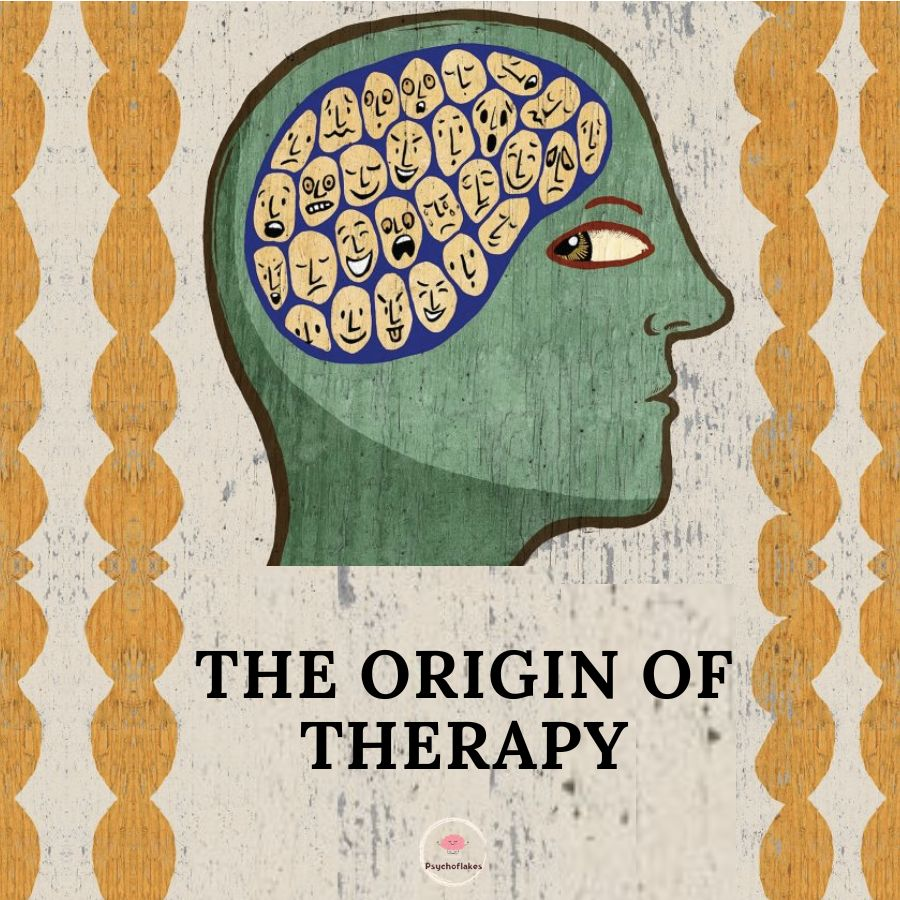
Therapy, at its core, is a collaborative and focused journey toward improved mental health and well-being. Understanding the history of
When someone mentions “therapy,” the first thing that might come up in one’s mind is a client and their therapist conversing comfortably seated in a room. This image portrays the traditional therapeutic setting that involves “talking it out” or exploring and understanding the client’s experiences by having them talk about their experiences. Although this setup has proven helpful for many populations, some find it challenging to emotionally release by talking about their experiences alone.
The setting facilitates the client’s emotional expression by combining therapy with various forms of expressive arts, including dance, writing, music, visual arts, and drama. The therapeutic process here is aided by an alternative method of expressing one’s experiences. This method is based on various art forms, imagination, expression, creativity, and active participation and is known as Expressive Arts Therapy. The International Expressive Arts Therapy Association (IEATA) defines this practice as integrating arts processes with psychology and community education, aiming to assist individuals in enhancing creativity, attaining clarity, and experiencing profound healing.
Facets of Expressive Arts Therapy
Expressive Arts Therapy branches out into five major domains :
Dance
Using dance as a therapeutic tool, EA therapists encourage their clients to use physical movements, yoga, and dance to express their inner experiences. Some basic therapy exercises incorporated here are the Melting Ice Cream exercise, Painting the world, and Movement metaphor.
Music
In therapy, the client creates notes and records lyrics and music with their therapist within a therapeutic relationship to address psychosocial, emotional, cognitive, and communication needs. ‘Therapeutic Songwriting’ is an exciting exercise that incorporates music into therapy. It includes a therapist purposefully engaging the songwriters in a creative process whereby they build a song that has personal meaning and leads them to self-discovery.
Art
Clients are encouraged to use visual arts to work through their emotions, thoughts, or experiences. Some common exercises include drawing and coloring mandalas, painting with fingers, clay sculpting, creating art with closed eyes, mask making, mosaic painting, and self-portraiture. Individuals who have faced emotional trauma, domestic abuse, anxiety, depression, and various psychological challenges can find value in expressing their thoughts via art.
Are you interested in learning art therapy?
Join us today!
https://www.psychoflakes.com/art-therapy
Writing and Storytelling
Writing is used to explore the client’s thoughts, emotions, and behaviors. The most common writing exercises in therapy include writing poems, journals, and stories. The concept of Storytelling, on the other hand, involves a collaborative approach to creating. An appropriate example of the same is ‘The Mutual Storytelling Technique.’ In this, the therapist provides the client with a prompt and allows them to build a story.
Psychodrama
Drama is incorporated majorly in a group setting where the clients explore their multiple roles, conflicts, and stressors in life by engaging in theatre techniques. These exercises, such as role-playing, improvisation, mirroring, and role reversal, are commonly used here.
Why choose Expressive Arts Therapy?
By now, it is clear that Expressive Art therapy embraces a variety of art forms as a way to help clients express their emotions and work towards better mental well-being.
However, what exactly makes people opt for Expressive Arts Therapy over the traditional therapy setup?
Here is an excerpt from a brief interaction with a Play Therapist who has a personal preference for Expressive Arts Therapy over the traditional therapy setting.
What are your takeaways from personal therapy?
So I started taking therapy online and I had to sit in my own place and most of the time there would be someone in the house. Even though nobody could hear me, it would constantly bother me that maybe people could hear me, so that was a challenge. It was also challenging for me to convey things verbally. Like, when my therapist asked me to reflect on something, it was difficult for me to think and verbally express my emotions, I felt too much pressure. Additionally, the practice of Homework didn’t work for me because I don’t fit well with deadlines. At one point it all sounded redundant and I couldn’t feel the relief that I was looking for.
Do you think Expressive Arts therapy could be a better fit for you personally? Why so?
Yes, sure. I’m a very expressive person. From childhood I would do most things in a creative way. Like, if I had to convey something, I would make a greeting card rather than expressing myself verbally. I also dance, do theatre and paint, so in those spaces I get the opportunity to express myself without explicitly saying things out loud.
In personal therapy, I felt like I had a filter on. But in Expressive Arts therapy, the acts of choosing colours, making patterns, putting paint on the paper, all are ways of expressing. So in my supervision sessions for Play therapy, my supervisor uses creative techniques to talk about my clients. I get a feeling of autonomy there, so that really helps me to reflect and express adequately.
Do you think Expressive Arts therapy indicates a specific population for itself?
Yes, just like any other therapy modality, Expressive Arts therapy fits well with only a limited population. I personally feel, for the people who choose Expressive Arts therapy, the meaning of art that they have matters. Like, I believe art makes life more meaningful, and gives an opportunity to escape reality. So for people who can make connections, formulate symbols and metaphors, and are reflective, Expressive Arts therapy can be effective.
Overall, Expressive Arts Therapy provides a unique pathway of introspection, self-discovery, expression, and healing through the diverse mediums of dance, music, visual arts, and more. These various mediums hold many fun and creative activities or exercises for clients to engage in and support their mental well-being. As with every therapeutic modality, Expressive Arts therapy is the first choice for some people and not all. People who enjoy connecting dots, communicate symbolically, and formulate metaphors, find it easier to express themselves creatively. Their creative process becomes a path to their emotional health.
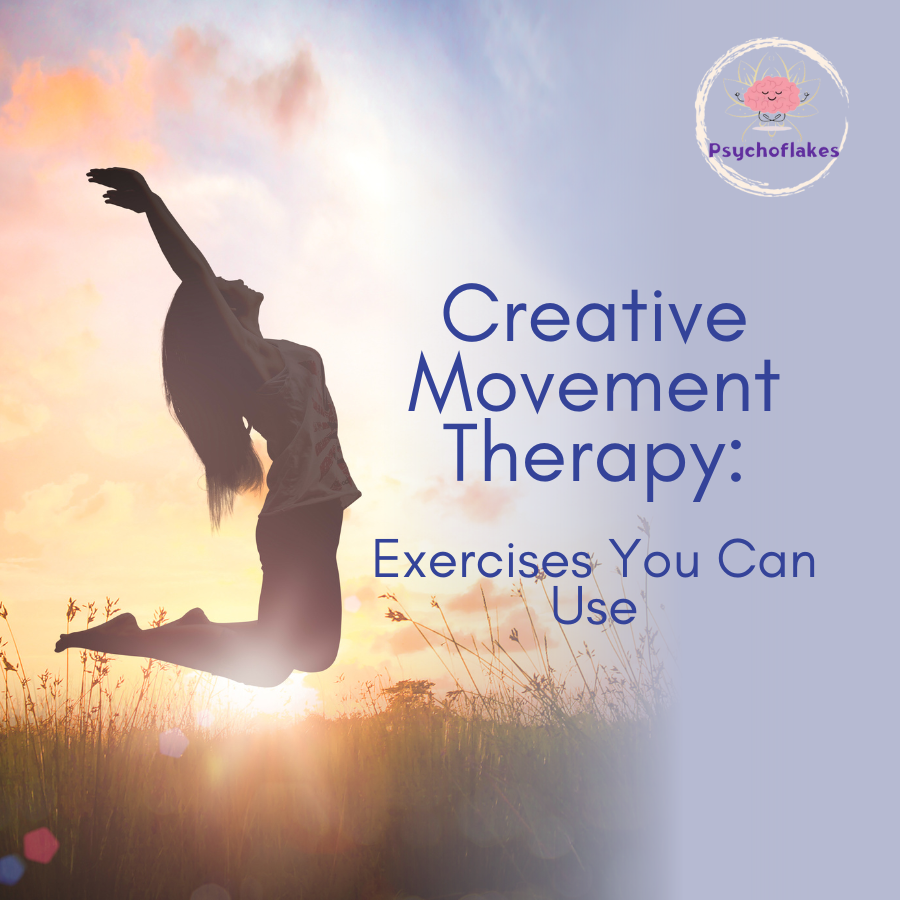
Creative Movement Therapy (CMT), or dance/movement therapy, is a therapeutic approach that utilises movement and dance to support individuals' emotional, cognitive, social, and physical well-being. It is based on the understanding that the mind and body are interconnected, and by engaging in purposeful movement, individuals can explore and express their thoughts and emotions. This form of therapy makes use of a variety of movement activities, dance, and expressive exercises in a guided manner by trained practitioners such that it helps build mental, emotional, and physical integration.
The foundations of CMT can be traced back to the early 20th century when pioneers like Rudolf Laban, a movement theorist, and Marian Chace, a dance artist and therapist, started exploring the impact of movement on psychology and mental well-being. Marian Chace started using dance as a therapeutic tool with psychiatric patients in the 1940s and her practice showed that they experienced significant symptom reduction and a lot of distress relief.
Over the years, the field evolved and gained recognition, and has started being utilised globally in various settings, including mental health institutions, schools, rehabilitation centres, and community programs, addressing a wide range of physical and mental health concerns. India has also become one of the leading countries to use this approach.
What concerns can be managed using Creative Movement Therapy?
Creative movement therapy can be employed to address a diverse range of concerns, both physical and mental. This includes stress and anxiety as CMT provides a non-verbal outlet that can help release tension stored in the body. It is also largely used to address trauma and helps individuals reconnect with their bodies, regain a sense of control, and process traumatic experiences in a safe and supportive environment.
CMT also helps build a positive relationship between individuals and their bodies and is thus helpful in addressing concerns around body image issues, eating disorders, chronic illness, and disability as well. Engaging in purposeful movement can stimulate cognitive processes, enhance memory, and improve overall cognitive function, making it beneficial for conditions like dementia.
CMT is also used to work with Autism Spectrum Disorder (ASD) as it can help improve social skills and communication, and address sensory processing challenges. It becomes a constructive means to explore and regulate their emotions. CMT also provides an alternative and non-verbal mode of expression, supporting communication development.
Some CMT Exercises for Stress Release that you can try
1. Melting Ice Cream Exercise
This exercise aims at releasing the tension we might be carrying in our body due to stress and aims to build relaxation. For this exercise, stand with your feet firmly planted on the ground in an area where you have enough space to lie down. In this activity, we will try to embody the qualities of an ice cream cone that has been left out into the sun and has started melting.
Start by visualising the sun over your head and imagining its heat warming you up. As though you were ice cream melting into a puddle, very slowly start moving your body and melt into the ground.
Take your time doing this exercise and pay close attention to how each part of your body feels as you are embodying the movement of the melting ice cream. When you are finally lying on the ground like a puddle, close your eyes and take a few deep breaths. Stay in the position of the puddle for however long feels comfortable for you.
2. Paint the World Exercise
This exercise aims at building mindfulness and releasing any tightness and tension we might be feeling in our body, especially around our neck, shoulders, back, and limbs. For this exercise, you need to be in a relatively clear/open area where you have enough space to fully extend your hands and legs (this could even be in your bedroom or living room but with the furniture moved back a bit).
Once you have made sure there are no objects around you and the space is clear, turn on a soft instrumental song or nature sounds and close your eyes.
Imagine a painting you would like to create around you (360 Degrees) and use your entire body to start painting it. Each different part of your body can be a different colour or a different type of paintbrush. For example, your fingers can be thin brushes used to add details but your leg can be a thick brush used to paint base layers.
As the painting is surrounding you from all angles, do ensure that you reach out and move around with big movements. Once you are done with the activity just shake off your hands and legs, and open your eyes.
3. Movement Metaphors
This exercise helps us explore the different movement types – bound, heavy, light, fast, slow, etc. and to build a connection with our body. As we move our body into these different movement metaphors it tightens and releases and helps relax our posture.
For this exercise, you need to be in an open and clear space where you can move freely.
In this exercise, we will embody the different movement qualities of a variety of everyday objects. You have to move around the space exactly how the object would move.
Start by taking on the movement quality of a feather and move around the space with light, airy movements. After this take on the quality of a rock, which would have bound and heavy movement. Some of the other items you can take up the movement quality of include – river, fire, metal, snake, etc.
As you do this exercise be mindful of what you feel in your body and which parts of your body are tight as compared to loose. Pay attention to the differences you feel in your body as you shift from one metaphor to the other.
In conclusion, creative movement therapy is a powerful and transformative approach to holistic well-being. Through the exploration of body, mind, and emotions, individuals can tap into their inner creativity, fostering self-discovery and healing. The exercises shared in this blog serve as small tasters of the long menu of creative movement therapy and are a gateway to building our mind-body connection. Whether used as a therapeutic intervention, a means of stress relief, or a pathway to self-discovery, creative movement therapy shows a lot of potential for personal growth and healing.
Supervision in counselling involves professionals seeking guidance from peers to enhance their skills and adhere to ethical standards. Supervision in