Penning Your Story- Art Of Journaling
Journaling Is Your Secret Helper Happy Lab: Imagine your mind as a busy highway with lots of thoughts racing by. […]
Journaling Is Your Secret Helper Happy Lab: Imagine your mind as a busy highway with lots of thoughts racing by. […]
Coping Mechanism for Creativity I often find myself thinking back to all the experiences or skills that I may have
Our mental well-being often ends up taking the back seat in today’s fast-paced and chaotic world. To work on it and push it towards enrichment, finding moments of peace and inner harmony becomes essential. A significant therapeutic tool that has gained attention in recent years for promoting mindfulness is the Mandala art.
It is based in the field of Art and Creativity, and involves drawing symmetrical patterns around a focal point. This activity paves a way for individuals to connect with their inner selves and feel grounded amidst the hustle and bustle of daily life.

The word “mandala” originates from the ancient Indian language of Sanskrit, and has a simple meaning, that is, “circle”. In the olden days, Mandalas were limited to the Hindu and Buddhist culture, where they were majorly used as spiritual symbols that signified ‘universe or wholeness’.
The centre represents ‘the self’ or a focal point of spiritual significance, while the overall circular design symbolises ‘unity, balance, and the cyclical nature of life’. Hence, the symmetrical geometric patterns carry profound symbolic meanings along with being visually appealing.
Coming to the concept of Mandalas under the light of psychotherapy and mindfulness, it is a powerful tool that is deeply meditative and therapeutic since it involves the act of creating. Whether drawn, painted, or created with various materials, the repetitive and deliberate nature of crafting a mandala engages the mind and encourages mindfulness. The activity shapes the individuals’ perspective to focus on the journey rather than the end result.
Apart from Mandalas being a pathway towards mindfulness, both have similar principles. These principles encourage living in the current moment, emphasising presence and awareness. Here are some principles common in them:
Concentration and Focus
When creating a Mandala, one requires to focus on their work of art and concentrate. From repeatedly drawing the symmetrical patterns to colouring in the intricate details demands attention. This helps the mind to focus on the present moment.
Stress reduction
The rhythmic movements and the soothing nature of colours in Mandalas, promote a calm and centred state of mind. The calmness in turn induces a sense of relaxation helping one to reduce their stress.
Expression
Since this activity involves creativity, it opens up doors for self-expression. It helps individuals to explore their emotions, thoughts and behaviour, and express them via drawing and colouring Mandalas. Overall, it provides an outlet for self-discovery and emotional release.
Using Mandalas as a way to cultivate mindfulness practices provides an accessible road towards inner peace and self-awareness. Whether as a form of stress relief or artistic expression, Mandalas allow individuals to achieve balance in their lives. Hence, one can readily consider picking up a pen or pencil or some colours and start creating mandalas to move towards a mindful self. Here are some points to remember when creating a Mandala:
Start from the centre point
This will serve as an anchor for your design.
Symmetry is key
By mirroring each pattern on both sides of the central point, a sense of balance in the overall piece is portrayed.
Embrace Imperfections
Perfection is not the goal here, one must let go of the need for precision when creating a Mandala.
Take your time
Allow yourself to create organically, since the therapeutic nature will only be upheld when it does not involve a deadline or time-limit.
Although these are some factors that one should keep in mind when creating a Mandala, there are no strict rules and regulations when it comes to creating mandalas. Since it allows one to freely explore and express their inner experiences it embraces a unique therapeutic quality. In the process of freely expressing oneself, they will tap into a state of mindfulness and relaxation.
Whether through deliberate strokes or a freestyle design creation, Mandalas push the person to the present moment. They readily experience a gateway into awareness and depths of their consciousness.
Therefore, Mandalas can be used as a way to cultivate mindfulness practices that provide an accessible road towards inner peace and self-awareness. The basic fusion of Mandalas and Mindfulness creates an enriching experience for individuals trying to be aware about the present moment.

An individual may experience intense grief, a challenging emotional state that can dominate one's thoughts and make it difficult, if not impossible, to focus on anything else. For some, the overwhelming nature of these emotions may lead them to suppress or mask their feelings, either intermittently or consistently.
Grief can often mirror the symptoms of depression, and it's not uncommon for individuals to develop depression in the aftermath of a significant loss. If coping with a major loss becomes overwhelming, seeking assistance from a healthcare professional, such as a doctor, is strongly advised.
In the immediate aftermath of a death, those left behind often grapple with shock, numbness, and denial, especially if the loss was unexpected. As the reality of the death sets in, feelings of intense sadness, emptiness, loneliness, anger, or guilt may emerge. These emotions can be painful, persistent, or overwhelming, often coming in waves that may temporarily recede before resurfacing. However, with time, these emotions tend to gradually diminish.
Responses to grief are highly individualized, with common feelings including sadness, shock, denial, numbness, anger, guilt, blame, and sometimes even relief. Grieving individuals may exhibit different behaviours than usual, experiencing difficulty concentrating, withdrawal from regular activities, engaging in substance use, or having thoughts of self-harm or an inability to carry on.
Grief can take a toll on physical health, leading to exhaustion and weakened immune systems, making individuals more susceptible to illness. It can impact appetite, sleep, and contribute to various physical discomforts such as headaches and body aches.
On a spiritual level, individuals may have dreams about their loved ones, seeking meaning and reevaluating their spiritual beliefs in the wake of loss.
While some people experience post-traumatic growth, finding wisdom, maturity, and new meaning in life after grief, others may struggle with complicated grief. Prolonged grief, also known as complex or complicated grief, is an enduring form of intense grief that makes it challenging for individuals to cope with the loss. Rather than progressing toward a more positive outlook, thoughts may become fixated in a dark, sorrowful place.
Those experiencing prolonged grief may feel emotionally paralyzed, unable to envision a future beyond the pain. Characteristics of prolonged grief include confusion, overwhelming sadness, extreme thoughts or behaviours, and an enduring longing for the past. Individuals in this state may find themselves trapped in a cycle of preoccupation with memories of the deceased, making the future seem bleak and despairing.
How to Take Care of the Physical Side of Grief?
Make Conscious Use of your Feelings.
When you are mourning, your first priority is expressing your feelings. It's been believed that you cannot heal if you are emotionless. As a result, it's critical to allow yourself to experience your emotions. Engage in self-kindness frequently. You don't have to control this part of your life, particularly while you're going through a grieving season. It's up to you how you choose to communicate your feelings. Another excellent way to connect with your emotions is to join a support group at a nearby community or religious centre.
Engage in Daily Mindful Movement
Engaging in daily physical activity helps alleviate the somatic suffering associated with bereavement. Exercises that target the mind and body, such as yoga, tai chi, or qigong, can be especially beneficial in calming the body and counteracting the negative effects of stress and anxiety. According to research, various types of exercise reduce the activation of genes that cause inflammation in the body, which has a molecular effect (Bui, 2017).
Engage in Mindfulness
Developing a meditation routine, engaging in breathwork, or going on an outdoor stroll or walk are some other suggestions for mindful movement. These pursuits help reduce anxiety, melancholy, and self-pity. Ask a friend to help, or sign up for a fitness class.
How to Take Care of Yourself while Grieving?
Rely on Friends and Family
Seek support from friends and family during this challenging time. Even if you typically pride yourself on being strong and independent, now is the moment to rely on those who care about you. Instead of avoiding them, bring your friends and loved ones closer, spend quality face-to-face time with them, and be open to the assistance they offer. Often, people genuinely want to help but may not know how, so communicate your needs—whether it's a comforting presence, a listening ear, or simply someone to spend time with. If you feel that you lack regular in-person connections, remember that it's never too late to cultivate new friendships.
Acknowledge your Feelings
Confront your emotions head-on. While attempting to suppress grief is an option, it's not a sustainable one. Healing requires acknowledging the pain. Avoiding feelings of sadness and loss merely extends the grieving process. Unresolved grief may contribute to complications such as depression, anxiety, substance abuse, and health issues.
Engage in Creativity
Express your emotions in a tangible or creative manner. Even if discussing your loss with others is challenging, consider documenting your thoughts and feelings in a journal. Alternatively, channel your emotions into creative outlets like creating a scrapbook or engaging in volunteer work related to your loss.
Engage in Hobbies and Activities
Continue to engage in your hobbies and interests. Returning to familiar activities that bring joy and foster connections can provide comfort and assist in coming to terms with your loss, facilitating the grieving process.
Grief can also often be compared to a silent companion that emerges in the aftermath of loss. It must not be confused for weakness, but rather a testament to the depth of our connections with those around us. Another way to understand the physical side of grief in a more relatable manner is as follows:
Grief as a Roller Coaster
Grief is like a roller coaster, taking lots of turns, ups and downs through various angles, nooks and corners. It manifests as sadness, the ache of loss, anger, the injustice that comes with separation, guilt, and the weight of unanswered questions.
If you experience grief this way, you can do an emotional check in with yourself.Take a moment to reflect on your emotional state. What turns, ups and downs and angles are you grieving today? Acknowledge them without judgement; each emotion is a valid expression of your unique journey.
Grief as a Canvas
Often our bodies become a canvas upon which grief paints its physical manifestations. It may appear as a lump in the throat, a heaviness in the chest, or the pit in the stomach. Fatigue, changes in appetite, and disrupted sleep patterns are the more common colours of the canvas and are reminders that our emotional and physical well-being are interconnected.
In order to relieve some of these feelings, a body scan activity can be done where one focuses attention on each part of the body. Any sensations and tensions that come up can be noticed. This activity can help be more attuned with your body.
Grief as a Game
Grief can often be a mind game where a mental dialogue is constantly going on. This game can also involve memories. It might be the replaying of shared moments, the negotiation with "what ifs," or the silent conversations with those we’ve lost. The mind becomes a storyteller, weaving narratives of love, loss, and the enduring legacy of those we hold dear.
To conclude, its important to keep in mind that everyone's grief is personal and subjective. There is no one particular way to heal that works for everyone. It is about doing what works for you. No one should tell you to move on or get over it. Allow yourself to feel without any judgment or sabotage. It's acceptable to experience anger, to express your emotions, to cry or not to cry. Similarly, it's permissible to find moments of joy, to laugh, and to let go when you feel ready. Heal at your own time.

Today, let's engage ourselves to explore healing with art.
Before we begin, press play, close your eyes and follow
or
Read along if you wish to.
Imagine a serene and comfortable space where you feel safe and at ease. This might be a cosy room filled with soft light or a peaceful outdoor setting. Picture yourself in this space, surrounded by an atmosphere of tranquillity.
Sit down, relax and breathe in.
In this creative world that you have created for yourself , visualise an array of artistic tools in front of you — brushes, paints, pencils, or any medium that resonates with you. Select the one that draws you in, that feels like an extension of your inner self.
With your chosen tool in hand, start to create on the blank canvas. There's no need for a specific image or form; let your intuition guide your movements. Allow the colours and shapes to flow organically from within.
As you engage in this artistic expression, notice the sensations in your body. Pay attention to the emotions that surface. Are there moments of joy, surprise, or perhaps a gentle release of tension?
Take a step back and observe your creation. This is more than just a creation of colours; it's a reflection of your thoughts and emotions. What do you see? What does your creation tell you about your inner world?
As you immerse yourself in the act of creation and reflection, understand that this process is a form of self-care and healing. Art allows you to externalise what words might struggle to convey. It provides a tangible expression of your experiences and a means to navigate the complexities of your emotions.
In the quiet of this artistic meditation, you may feel a sense of release, understanding, or even a newfound perspective on your own journey. Art becomes a bridge between the conscious and the subconscious, offering a gentle pathway toward healing.
As you open your eyes and return to the present, carry with you the insights gained from this artistic exploration. Know that the canvas is not merely a space for art; it's a canvas of resilience, of self-discovery, and of healing.

We live in a world where the human spirit, against all odds, can rise above challenges and adversity. No matter what or where, we all come with a little amount of resilience. Resilience is the ability to bounce back from life's setbacks, adapt to change, and keep moving forward. It's not about avoiding stress and adversity but rather facing them head-on and emerging stronger on the other side. Studies show that resilient individuals not only cope better with stress but also have improved mental health outcomes.
Reduced Stress Levels: Resilient individuals have been found to exhibit lower cortisol levels, the hormone associated with stress. This ability to manage stress contributes to better mental well-being.
Enhanced Emotional Well-being: Resilience is linked to increased emotional intelligence, allowing individuals to navigate and regulate their emotions effectively. This, in turn, leads to improved mental health.
Positive Cognitive Patterns: Resilient people tend to develop positive thinking patterns, enabling them to reframe challenges as opportunities for growth. This positive mindset has a profound impact on mental health.
Dynamic Adaptability: Resilience in mental health goes beyond just endurance; it involves dynamic adaptability. Instead of rigidly bouncing back to a previous state, resilient individuals show the capacity to adapt, learn, and grow from challenges. This adaptability can foster a more robust and flexible mental health framework, allowing individuals to navigate future stressors with increased efficacy.
Vulnerability Acknowledgment: Resilience includes acknowledging and embracing vulnerability. Rather than suppressing or denying emotions, resilient individuals recognize the importance of processing and understanding their feelings. This acknowledgment of vulnerability fosters a healthier approach to mental health, promoting self-awareness and emotional intelligence.
Community Connection: Resilience extends beyond individual strength to encompass community and social support. Building and maintaining strong social connections contribute significantly to mental well-being. Resilient individuals not only draw strength from their own coping mechanisms but also actively seek and provide support within their social networks. This emphasis on community connection reinforces the idea that mental health is a collective and interconnected experience.
Scientific evidence suggests that resilience is not a fixed trait but a skill that can be developed over time. Neuroplasticity, the brain's ability to adapt and reorganize itself, plays a crucial role in building resilience.
Research indicates that experiences and behaviours associated with resilience can lead to structural changes in the brain. Specifically, the prefrontal cortex, responsible for decision-making and emotional regulation, undergoes positive alterations, enhancing an individual's ability to cope with stress.
Take a moment to reflect on a challenging situation you've faced. Consider how you coped, what you learned, and how it contributed to your personal growth. Write down the positive aspects that emerged from that experience.
Now, reset your mindset by identifying one small step you can take today to turn a current challenge into an opportunity for growth.
Despite facing a setback when he was cut from his high school basketball team, Michael Jordan didn't let this disappointment deter him. Instead, he channeled that experience into a powerful motivator, propelling him to become a six-time NBA champion and five-time MVP, solidifying his status as the greatest basketball player of all time.
Serena Williams, a tennis icon, has encountered various injuries and health challenges during her career, including a life-threatening pulmonary embolism in 2011. Despite these adversities, Williams showcased exceptional resilience and determination. Following her recovery, she went on to achieve success by winning multiple Grand Slam titles.
Excessive resilience, particularly when pursuing unrealistic goals, can be detrimental. The pressure to persist despite unattainable objectives may result in wasted time and energy. It's crucial to recognize when to adjust strategies rather than persisting with false hope, as prolonged pursuit of unachievable missions can lead to meaningless activities and reinforce overconfidence. It's not about quitting, but about wisely redirecting efforts based on past experiences and the effectiveness of current approaches.
Sometimes, excessive optimism, often mistaken for resilience, can lead to toxic positivity. When taken to extremes, relentless positivity may cause individuals to ignore genuine feelings of grief, worry, or stress. Denying these emotions prevents healthy processing and understanding.
Emotions, whether positive or negative, offer valuable insights into our well-being. Insisting on constant happiness and calmness oversimplifies the human experience, neglecting the importance of acknowledging and addressing a full range of emotions. Forcing relentless happiness comes at a cost, as it suppresses crucial messages and neglects vital information necessary for overall well-being.
Resilience is sometimes used dismissively, especially by parents who may downplay their children's problems by citing their resilience. The discomfort of addressing a child's distress may lead to inaction and a failure to provide necessary protection. Similarly, resilience can be wielded dismissively towards adults, criticising them for not being "strong enough."
While complimenting someone as resilient may intend to avoid witnessing their suffering, it can also convey a message of indifference, essentially saying, "Deal with it; you can handle it, don't bother me." A more helpful approach would involve recognizing specific resilience components, such as patience or effective communication skills.
Prioritize Relaxation: Cultivate a routine that nurtures your mind and body. This could involve establishing a consistent sleep schedule, exploring new physical activities, or engaging in relaxation techniques like deep breathing or meditation.
Master Thought Awareness: Develop resilience by avoiding the derailment of negative thoughts. Practice positive thinking and pay attention to your self-talk during challenging situations. If you catch yourself making permanent, pervasive, or personalized statements, consciously correct them in your mind.
Refine Your Outlook: Use cognitive restructuring to alter how you perceive negative situations. This involves actively changing your thought patterns to foster a more positive mindset.
Embrace Growth from Mistakes: Every mistake offers a valuable lesson. Embrace the concept of "post-traumatic growth," where crises become opportunities for positive life changes. Learn from failures and use them as stepping stones for improvement.
Choose Your Response: Acknowledge that everyone faces tough days, but your reaction is within your control. Opt for a calm and logical response to crises, focusing on solutions rather than succumbing to panic and negativity.
Maintain Perspective: Recognize that while a crisis may seem overwhelming in the moment, its long-term impact may be less significant. Avoid blowing events out of proportion and strive to maintain a balanced perspective.
Set SMART Goals: Develop effective personal goals aligned with your values. Setting Specific, Measurable, Achievable, Relevant, and Time-bound (SMART) goals allows you to learn from experiences and work towards continuous improvement.
Boost Self-Confidence: Foster a belief in your ability to succeed despite setbacks. Developing confidence empowers you to take risks and persevere, contributing to forward momentum.
Nurture Relationships: Build strong connections at work and in your personal life. Resilience is bolstered by a robust support network. Seek help when needed, treating others with compassion and empathy.
Embrace Flexibility: Understand that change is inevitable, and plans may need adjustments. Resilient individuals adapt to evolving circumstances, remaining open to amendments and new opportunities. What strategies resonate with you, and how might you incorporate them into your daily life?
When someone mentions “therapy,” the first thing that might come up in one’s mind is a client and their therapist conversing comfortably seated in a room. This image portrays the traditional therapeutic setting that involves “talking it out” or exploring and understanding the client’s experiences by having them talk about their experiences. Although this setup has proven helpful for many populations, some find it challenging to emotionally release by talking about their experiences alone.
The setting facilitates the client’s emotional expression by combining therapy with various forms of expressive arts, including dance, writing, music, visual arts, and drama. The therapeutic process here is aided by an alternative method of expressing one’s experiences. This method is based on various art forms, imagination, expression, creativity, and active participation and is known as Expressive Arts Therapy. The International Expressive Arts Therapy Association (IEATA) defines this practice as integrating arts processes with psychology and community education, aiming to assist individuals in enhancing creativity, attaining clarity, and experiencing profound healing.
Facets of Expressive Arts Therapy
Expressive Arts Therapy branches out into five major domains :
Dance
Using dance as a therapeutic tool, EA therapists encourage their clients to use physical movements, yoga, and dance to express their inner experiences. Some basic therapy exercises incorporated here are the Melting Ice Cream exercise, Painting the world, and Movement metaphor.
Music
In therapy, the client creates notes and records lyrics and music with their therapist within a therapeutic relationship to address psychosocial, emotional, cognitive, and communication needs. ‘Therapeutic Songwriting’ is an exciting exercise that incorporates music into therapy. It includes a therapist purposefully engaging the songwriters in a creative process whereby they build a song that has personal meaning and leads them to self-discovery.
Art
Clients are encouraged to use visual arts to work through their emotions, thoughts, or experiences. Some common exercises include drawing and coloring mandalas, painting with fingers, clay sculpting, creating art with closed eyes, mask making, mosaic painting, and self-portraiture. Individuals who have faced emotional trauma, domestic abuse, anxiety, depression, and various psychological challenges can find value in expressing their thoughts via art.
Are you interested in learning art therapy?
Join us today!
https://www.psychoflakes.com/art-therapy
Writing and Storytelling
Writing is used to explore the client’s thoughts, emotions, and behaviors. The most common writing exercises in therapy include writing poems, journals, and stories. The concept of Storytelling, on the other hand, involves a collaborative approach to creating. An appropriate example of the same is ‘The Mutual Storytelling Technique.’ In this, the therapist provides the client with a prompt and allows them to build a story.
Psychodrama
Drama is incorporated majorly in a group setting where the clients explore their multiple roles, conflicts, and stressors in life by engaging in theatre techniques. These exercises, such as role-playing, improvisation, mirroring, and role reversal, are commonly used here.
Why choose Expressive Arts Therapy?
By now, it is clear that Expressive Art therapy embraces a variety of art forms as a way to help clients express their emotions and work towards better mental well-being.
However, what exactly makes people opt for Expressive Arts Therapy over the traditional therapy setup?
Here is an excerpt from a brief interaction with a Play Therapist who has a personal preference for Expressive Arts Therapy over the traditional therapy setting.
What are your takeaways from personal therapy?
So I started taking therapy online and I had to sit in my own place and most of the time there would be someone in the house. Even though nobody could hear me, it would constantly bother me that maybe people could hear me, so that was a challenge. It was also challenging for me to convey things verbally. Like, when my therapist asked me to reflect on something, it was difficult for me to think and verbally express my emotions, I felt too much pressure. Additionally, the practice of Homework didn’t work for me because I don’t fit well with deadlines. At one point it all sounded redundant and I couldn’t feel the relief that I was looking for.
Do you think Expressive Arts therapy could be a better fit for you personally? Why so?
Yes, sure. I’m a very expressive person. From childhood I would do most things in a creative way. Like, if I had to convey something, I would make a greeting card rather than expressing myself verbally. I also dance, do theatre and paint, so in those spaces I get the opportunity to express myself without explicitly saying things out loud.
In personal therapy, I felt like I had a filter on. But in Expressive Arts therapy, the acts of choosing colours, making patterns, putting paint on the paper, all are ways of expressing. So in my supervision sessions for Play therapy, my supervisor uses creative techniques to talk about my clients. I get a feeling of autonomy there, so that really helps me to reflect and express adequately.
Do you think Expressive Arts therapy indicates a specific population for itself?
Yes, just like any other therapy modality, Expressive Arts therapy fits well with only a limited population. I personally feel, for the people who choose Expressive Arts therapy, the meaning of art that they have matters. Like, I believe art makes life more meaningful, and gives an opportunity to escape reality. So for people who can make connections, formulate symbols and metaphors, and are reflective, Expressive Arts therapy can be effective.
Overall, Expressive Arts Therapy provides a unique pathway of introspection, self-discovery, expression, and healing through the diverse mediums of dance, music, visual arts, and more. These various mediums hold many fun and creative activities or exercises for clients to engage in and support their mental well-being. As with every therapeutic modality, Expressive Arts therapy is the first choice for some people and not all. People who enjoy connecting dots, communicate symbolically, and formulate metaphors, find it easier to express themselves creatively. Their creative process becomes a path to their emotional health.
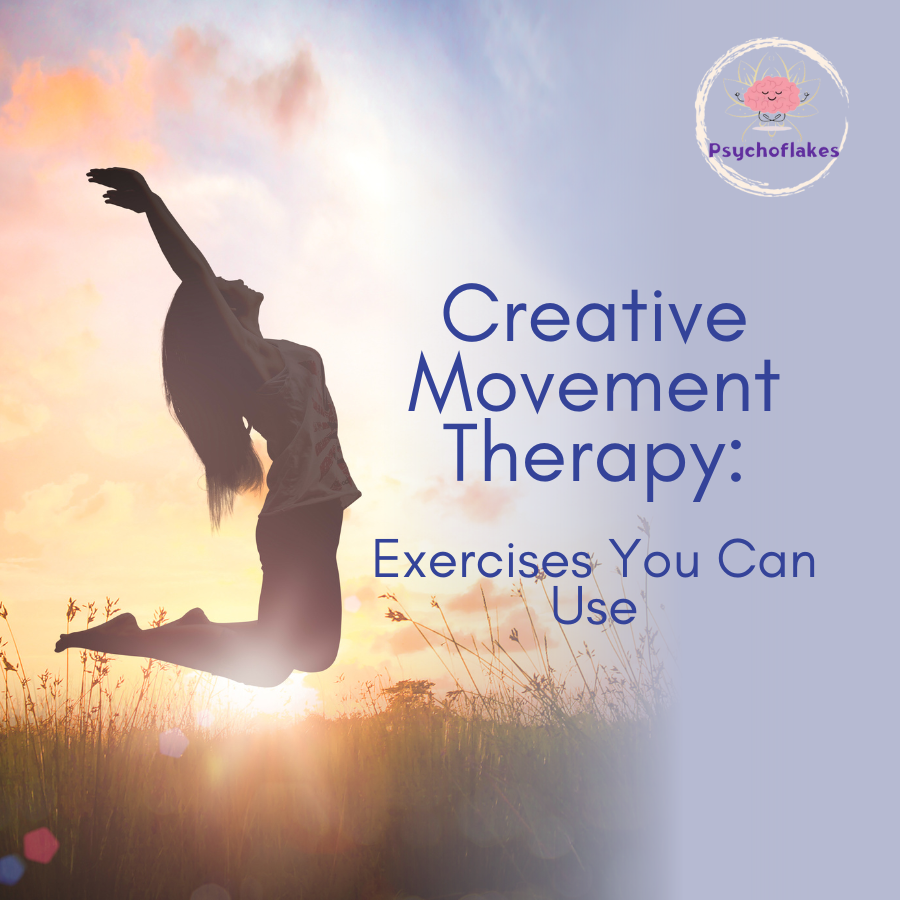
Creative Movement Therapy (CMT), or dance/movement therapy, is a therapeutic approach that utilises movement and dance to support individuals' emotional, cognitive, social, and physical well-being. It is based on the understanding that the mind and body are interconnected, and by engaging in purposeful movement, individuals can explore and express their thoughts and emotions. This form of therapy makes use of a variety of movement activities, dance, and expressive exercises in a guided manner by trained practitioners such that it helps build mental, emotional, and physical integration.
The foundations of CMT can be traced back to the early 20th century when pioneers like Rudolf Laban, a movement theorist, and Marian Chace, a dance artist and therapist, started exploring the impact of movement on psychology and mental well-being. Marian Chace started using dance as a therapeutic tool with psychiatric patients in the 1940s and her practice showed that they experienced significant symptom reduction and a lot of distress relief.
Over the years, the field evolved and gained recognition, and has started being utilised globally in various settings, including mental health institutions, schools, rehabilitation centres, and community programs, addressing a wide range of physical and mental health concerns. India has also become one of the leading countries to use this approach.
What concerns can be managed using Creative Movement Therapy?
Creative movement therapy can be employed to address a diverse range of concerns, both physical and mental. This includes stress and anxiety as CMT provides a non-verbal outlet that can help release tension stored in the body. It is also largely used to address trauma and helps individuals reconnect with their bodies, regain a sense of control, and process traumatic experiences in a safe and supportive environment.
CMT also helps build a positive relationship between individuals and their bodies and is thus helpful in addressing concerns around body image issues, eating disorders, chronic illness, and disability as well. Engaging in purposeful movement can stimulate cognitive processes, enhance memory, and improve overall cognitive function, making it beneficial for conditions like dementia.
CMT is also used to work with Autism Spectrum Disorder (ASD) as it can help improve social skills and communication, and address sensory processing challenges. It becomes a constructive means to explore and regulate their emotions. CMT also provides an alternative and non-verbal mode of expression, supporting communication development.
Some CMT Exercises for Stress Release that you can try
1. Melting Ice Cream Exercise
This exercise aims at releasing the tension we might be carrying in our body due to stress and aims to build relaxation. For this exercise, stand with your feet firmly planted on the ground in an area where you have enough space to lie down. In this activity, we will try to embody the qualities of an ice cream cone that has been left out into the sun and has started melting.
Start by visualising the sun over your head and imagining its heat warming you up. As though you were ice cream melting into a puddle, very slowly start moving your body and melt into the ground.
Take your time doing this exercise and pay close attention to how each part of your body feels as you are embodying the movement of the melting ice cream. When you are finally lying on the ground like a puddle, close your eyes and take a few deep breaths. Stay in the position of the puddle for however long feels comfortable for you.
2. Paint the World Exercise
This exercise aims at building mindfulness and releasing any tightness and tension we might be feeling in our body, especially around our neck, shoulders, back, and limbs. For this exercise, you need to be in a relatively clear/open area where you have enough space to fully extend your hands and legs (this could even be in your bedroom or living room but with the furniture moved back a bit).
Once you have made sure there are no objects around you and the space is clear, turn on a soft instrumental song or nature sounds and close your eyes.
Imagine a painting you would like to create around you (360 Degrees) and use your entire body to start painting it. Each different part of your body can be a different colour or a different type of paintbrush. For example, your fingers can be thin brushes used to add details but your leg can be a thick brush used to paint base layers.
As the painting is surrounding you from all angles, do ensure that you reach out and move around with big movements. Once you are done with the activity just shake off your hands and legs, and open your eyes.
3. Movement Metaphors
This exercise helps us explore the different movement types – bound, heavy, light, fast, slow, etc. and to build a connection with our body. As we move our body into these different movement metaphors it tightens and releases and helps relax our posture.
For this exercise, you need to be in an open and clear space where you can move freely.
In this exercise, we will embody the different movement qualities of a variety of everyday objects. You have to move around the space exactly how the object would move.
Start by taking on the movement quality of a feather and move around the space with light, airy movements. After this take on the quality of a rock, which would have bound and heavy movement. Some of the other items you can take up the movement quality of include – river, fire, metal, snake, etc.
As you do this exercise be mindful of what you feel in your body and which parts of your body are tight as compared to loose. Pay attention to the differences you feel in your body as you shift from one metaphor to the other.
In conclusion, creative movement therapy is a powerful and transformative approach to holistic well-being. Through the exploration of body, mind, and emotions, individuals can tap into their inner creativity, fostering self-discovery and healing. The exercises shared in this blog serve as small tasters of the long menu of creative movement therapy and are a gateway to building our mind-body connection. Whether used as a therapeutic intervention, a means of stress relief, or a pathway to self-discovery, creative movement therapy shows a lot of potential for personal growth and healing.
Supervision in counselling involves professionals seeking guidance from peers to enhance their skills and adhere to ethical standards. Supervision in

In a land far away, there was a large forest. It was more than just tall trees and beautiful green