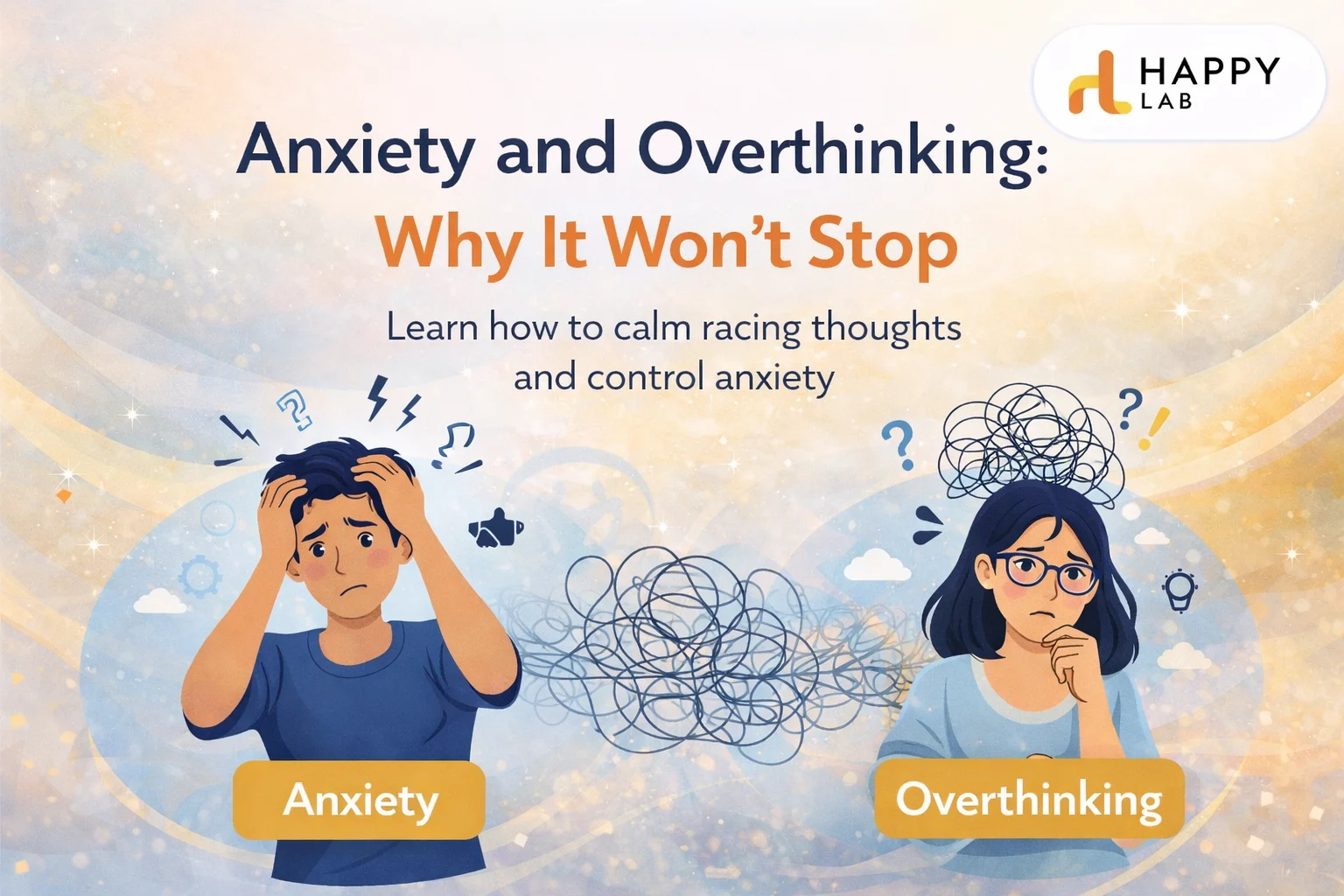
Anxiety and Overthinking: How to Break the Cycle? A Guide to Calming Your Mind
Have you ever lain in bed replaying a simple conversation from the morning?
“Why did I say that?”
“Did they misunderstand me?”
“Are they upset?”
Or perhaps you have experienced that sudden rush of heart before a meeting, tightening of the chest and screaming in your head, something wrong.
The real fact is that anxiety and overthinking are not synonyms, as they may seem similar.
Many people confuse the two. Others are proud to say that they are an overthinker. Some also experience anxiety inconspicuously when something takes place in their bodies.
We shall do it in simple And with examples, will see the difference and learn viable ways on how to manage anxiety before it dominates you.
Due to the fact that your mind is to be your battle field.
What Is Overthinking?
Overthinking is when your mind analyzes, replays, and dissects situations repeatedly, often without reaching a solution.
It usually sounds like:
- “What if I made the wrong decision?”
- “Maybe I should have said something else.”
- “What if this goes wrong?”
It’s like your brain is trying to solve a puzzle that doesn’t even exist.
Overthinking is mostly mental. It doesn’t always come with intense physical symptoms. It’s exhausting but quieter than anxiety.
What Is Anxiety?
Anxiety is more than thinking too much.
It’s a mental and physical response to perceived danger, even when the danger isn’t real.
Common signs include:
- Racing heartbeat
- Tight chest
- Sweaty palms
- Restlessness
- Feeling “on edge”
- Trouble sleeping
Anxiety activates your body’s alarm system.
Imagine a smoke detector going off because you burned toast. That’s anxiety. The alarm is loud even though there’s no real fire.
Example: Overthinking at Work
Let’s talk about Rahul.
Rahul sent an email to his manager. The manager replied with just two words:
“Let’s discuss.”
That’s it.
Now Rahul’s mind starts racing:
- “Am I in trouble?”
- “Did I mess up?”
- “What if I lose this project?”
For the next 6 hours, he replays every detail of his email.
But here’s the thing: Rahul’s body feels normal. He’s not sweating. His heart isn’t racing. He’s just stuck in mental loops.
That’s overthinking.
Example: Anxiety Before a Presentation
Now meet Sneha.
She has to present in front of her team tomorrow.
The night before:
- Her heart beats faster.
- Her hands feel cold.
- She can’t sleep.
- She imagines blanking out.
- She feels a knot in her stomach.
Even though nothing bad has happened yet, her body reacts as if danger is near.
That’s anxiety.
See the difference?
Overthinking lives mostly in thoughts.
Anxiety lives in both thoughts and the body.
Anxiety and Overthinking: How They Interact
Here’s where it gets complicated.
Overthinking can trigger anxiety.
Example:
You keep thinking, “What if I fail?”
Eventually, your body believes the threat is real.
Your chest tightens.
Now you’re anxious.
And anxiety can trigger overthinking:
Your heart races.
You think, “Why is this happening?”
Now you start analyzing everything.
It becomes a cycle.
Anxiety and overthinking feed each other.
Key Differences in Simple Words
Let’s make it crystal clear:
Overthinking | Anxiety |
Repetitive thoughts | Fear response |
Mostly mental | Mental + physical |
Slower, draining | Intense, urgent |
Doubt-focused | Threat-focused |
Overthinking asks, “Did I do it right?”
Anxiety screams, “Something is wrong!”
Physical Symptoms: The Big Clue
If you’re wondering which one you’re dealing with, ask yourself:
- Is my heart racing?
- Am I sweating?
- Is my breathing shallow?
- Do I feel sudden fear?
If yes, anxiety may be present.
Overthinking feels heavy.
Anxiety feels alarming.
Why Your Brain Overthinks
Your brain believes overthinking keeps you safe.
It says:
“If I analyze everything, I won’t make mistakes.”
But instead of preventing pain, it creates mental exhaustion.
Often, overthinking is linked to:
- Perfectionism
- Fear of judgment
- Past criticism
- Low self-trust
It’s not weakness. It’s a coping mechanism that went too far.
Why Anxiety Feels So Intense
Anxiety is biological.
When your brain senses danger, it releases stress hormones. Your body prepares to fight or run even if the “danger” is just a meeting or a phone call.
That’s why anxiety feels real.
Because to your nervous system, it is.
How to Control Anxiety: Step-by-Step
Let’s talk solutions. You deserve relief.
1. Slow Down Your Breathing
Try this:
Inhale for 4 seconds
Hold for 4 seconds
Exhale for 6 seconds
This signals safety to your brain.
2. Name What’s Happening
Say:
“This is anxiety. It will pass.”
Labeling reduces intensity.
3. Use the 5-4-3-2-1 Grounding Technique
5 things you see
4 things you feel
3 things you hear
2 things you smell
1 thing you taste
It pulls you back into the present.
4. Move Your Body
Even a short walk resets your nervous system.
5. Reduce Caffeine
Caffeine can increase anxiety symptoms significantly.
These steps help you learn how to control anxiety in daily life.
How to Break the Overthinking Loop
Here’s what works:
Set a Decision Deadline
Give yourself 10 minutes to decide.
Ask: Is This Useful Thinking?
If not, shift focus.
Write It Down
Journaling clears mental clutter.
Take One Small Action
Action reduces analysis.
Overthinking thrives in inaction.
Daily Habits That Calm Both
Small daily practices matter more than dramatic changes.
- Regular sleep schedule
- Morning sunlight exposure
- Limiting social media
- Talking openly about feelings
- Practicing gratitude
Mental peace is built dailynot magically.
When Should You Seek Help?
If anxiety and overthinking:
- Affect your relationships
- Disturb your sleep regularly
- Cause panic attacks
- Impact your work
- Make you avoid social situations
It’s time to seek support.
Therapy is not a last option. It’s a healthy one.
You Are Not “Too Much” – You Are Overloaded
Many people with anxiety are highly responsible, sensitive, and thoughtful.
You care deeply.
You think deeply.
You feel deeply.
That’s not weakness.
It just means your mind needs better tools not more criticism
Conclusion
In case you have been secretly fighting anxiety and being an overthinker, then listen to this carefully:
You are not broken.
To save you your brain has taught some patterns. However, the kind of protection does not have to be panicking. And thinking does not always need to be like torture.
Anxiety control is not what is practiced to keep thoughts at bay. It is concerned with knowing them, reacting in a different way, and mellowing your nervous system.
And sometimes it is more difficult to do it alone than to start with.
In case you are in Bangalore or need some reliable help over the internet, Happy lab counselling centre provides professional mental health counselling both in person and through the internet. Their seasoned therapists deal with people who are stressed, experiencing burnout, anxious, overthinking, and in problems with relationships, etc.
It is initially daunting to chat with a Best online therapist. However, it is usually just one secure conversation that will make you notice your patterns well and begin to change them.
You deserve a calm mind.
You need to be emotionally clear.
And best of all you need encouragement.
FAQ'S
Is overthinking the same as anxiety?
No. Overthinking is a repetitive thinking process and anxiety is both a mental and physical process such as a racing heart or tight chest.
Can overthinking turn into anxiety?
Yes. This overthinking may lead to a high level of stress and later be accompanied with the anxiety symptoms.
What is the fastest way to calm anxiety?
Why do I overthink everything?
Overthinking is usually caused by the fear of making mistakes or being a perfectionist or by negative criticism. It is generally an acquired coping style.
Should I see a therapist for anxiety and overthinking?
When thoughts or anxiety affect the normal lifestyle, sleep, or relationships, it can be very helpful to get professional help.