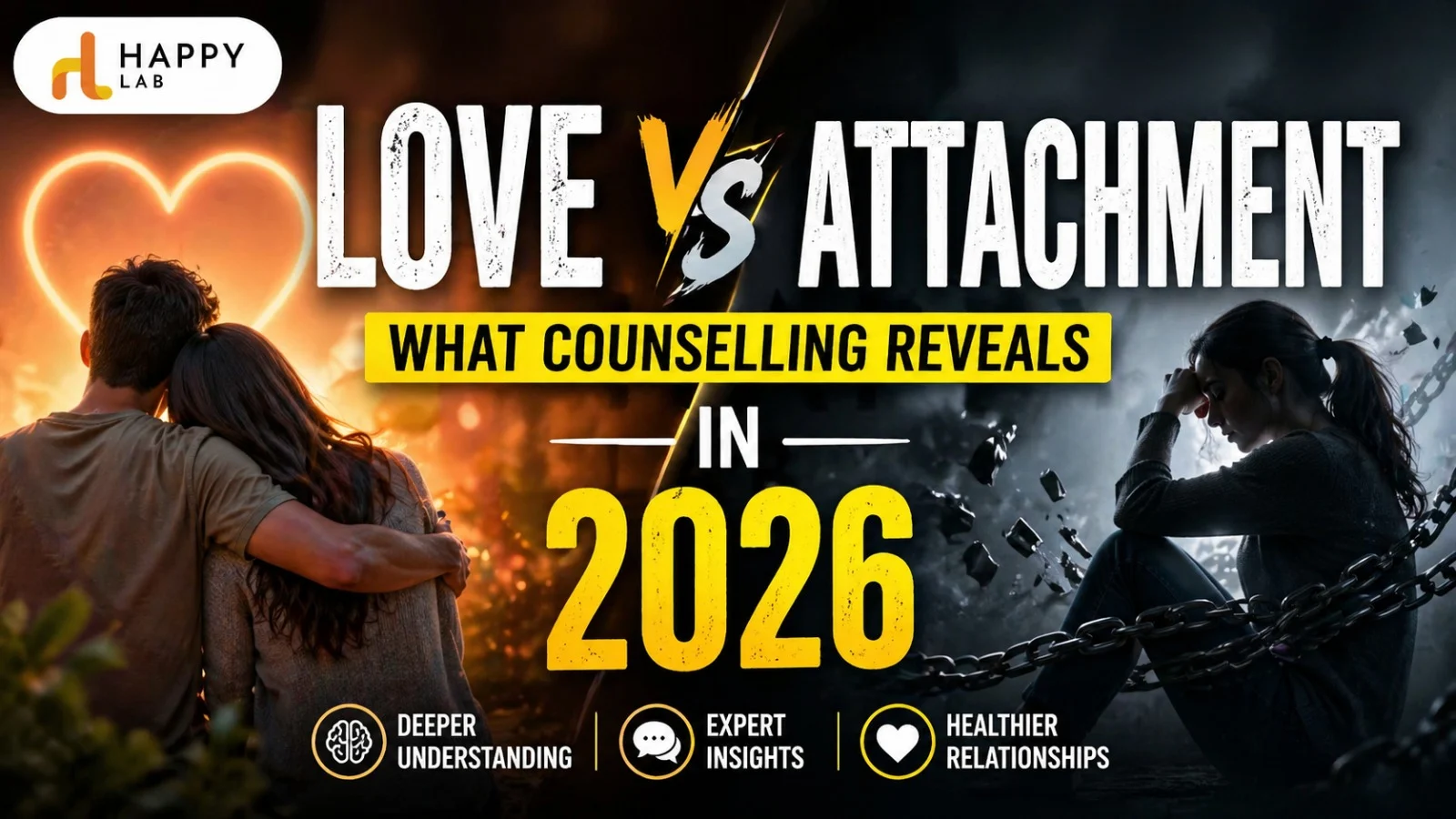
Love vs Attachment: What Counselling Reveals in 2026
Happy Lab – Talk with a Therapist Online & Offline in Bangalore
Happy Lab – Talk with a Therapist Online & Offline in Bangalore
Let’s be real.
We all know that feeling in relationships when we ask ourselves:
Am I in love or am I addicted?”
It’s not an easy question. That’s because when we love, we feel so much. The middle-of-the-night phone calls, the panic that they won’t be there, the desire to speak to them each day it all feels authentic.
But here’s what most people don’t understand for many years:
Intense feelings aren’t always love. It’s sometimes just love masquerading as attachment.
In 2026, we’re learning something in relationship counselling: it’s not that most people lack love. They’re about the wrong kind of attachment.
The work of reputable counsellors such as Happy Lab is helping couples to recognise the difference between emotional dependency and love and it’s transforming relationships.
Let’s put it simply.
What is Love in Real Life?
Love is not dramatic. It’s not loud. It’s not confusing.
Love is calm.
It’s like sitting next to someone and feeling okay even in silence.
Real Love Looks Like:
You feel safe being yourself
You don’t overthink every message
You respect each other’s space
You grow as individuals
Love says: “I choose you, not because I need you but because I value you.”
What is Attachment Actually?
Attachment is emotional dependence.
It often comes from:
Fear of being alone
Past emotional wounds
Lack of self-worth
Attachment Feels Like:
“Why didn’t they reply?”
“What if they leave me?”
“I can’t imagine life without them”
Attachment says: “I need you to feel okay.”
Love vs Attachment: Simple Comparison
Factor | Love | Attachment |
Feeling | Peaceful | Anxious |
Space | Healthy | Fearful |
Dependency | Low | High |
Trust | Strong | Weak |
Control | None | High |
Why Attachment Feels Like Love
Here’s where most people get confused.
Attachment creates intensity.
And we often mistake intensity for love.
Think of it like this:
Love is a steady flame
Attachment is a burning fire
One warms you. The other can burn you.
Signs You Are in Love
You are likely in love if:
You feel calm, not anxious
You don’t try to control them
You respect boundaries
You trust without constant reassurance
Signs You Are Emotionally Attached
You are likely attached if:
You check your phone constantly
You feel insecure often
You overthink everything
You feel incomplete without them
The Psychology Behind Attachment
Psychologists explain this through attachment styles:
4 Main Types
Secure
Anxious
Avoidant
Fearful
Most relationship problems come from unresolved attachment styles.
Childhood Patterns That Affect Love
Your past shapes your present.
If you grew up:
- Feeling ignored → You may fear abandonment
- Feeling controlled → You may avoid closeness
That’s why many adults struggle with love vs attachment.
Love or Attachment: Self-Check Questions
Ask yourself honestly:
- Do I feel calm or anxious?
- Do I trust them or constantly doubt them?
- Can I be happy alone?
If your relationship feels like emotional stress it’s likely attachment.
Healthy Relationship
Communication
Respect
Emotional safety
Toxic Relationship
Control
Manipulation
Dependency
Modern Relationships in 2026
Today’s relationships are more complex than ever.
Common Problems
Social media comparison
Fear of commitment
Emotional burnout
Lack of deep connection
How Counselling Changes Relationships
This is where real transformation happens.
At Happy Lab:
- Patterns are identified
- Emotions are understood
- Communication improves
Their structured approach helps couples break repeating cycles and build clarity .
How to Move from Attachment to Love
Practical Steps
Build self-worth
Stop seeking constant validation
Set boundaries
Learn to be alone
Seek therapy when needed
Mistakes People Make in Relationships
- Ignoring red flags
- Confusing intensity with love
- Staying out of fear
- Losing individuality
Why Happy Lab is the Best Choice
Happy Lab stands out as one of the best marriage counsellors in bangalore.
What Makes Them Different?
3000+ happy clients
97% recommendation rate
Expert therapists trained in CBT, ACT, DBT
Online & offline sessions
Services Offered
Couple counselling
Individual therapy
Online therapy across India
Structured relationship programs
Whether you’re struggling with love or attachment, their therapists help you gain clarity.
Conclusion
Understanding love vs attachment is not just about relationships it’s about understanding yourself.
If you feel:
- Confused in your relationship
- Emotionally drained
- Stuck in repeating patterns
It’s time to take action.
Here’s What You Can Do Next:
✔ Talk to a professional therapist
✔ Identify your emotional patterns
✔ Build a healthier relationship mindset
Why Choose Happy Lab (Quick Summary)
Top Reasons:
- ✔ Best relationship counselling in bangalore
- ✔ Online + Offline sessions
- ✔ Structured therapy programs
- ✔ Proven results with real clients
Comparison Table: Before vs After Counselling
Before Counselling | After Counselling |
Confusion | Clarity |
Emotional balance | |
Dependency | Independence |
Repeated fights | Healthy communication |
Step-by-Step Action Plan
- Accept your emotional state
- Stop ignoring patterns
- Book a therapy session
- Work on yourself consistently
- Build healthy love
Start your journey today with Happy Lab – your trusted partner for relationship counselling online & offline in Bangalore.
FAQ'S
What is love vs attachment?
Love is secure and peaceful, while attachment is driven by fear and dependency.
What is the difference between attachment and love?
Love supports growth, attachment creates dependency.
How do I know if it’s love or attachment?
Love feels calm; attachment feels anxious.
Can attachment turn into love?
Yes, with awareness and counselling.
Why do I feel dependent on my partner?
It may be emotional attachment or insecurity.
Is attachment unhealthy?
Excessive attachment can harm relationships.
What are signs of true love?
Trust, respect, and emotional safety.
What are signs of attachment?
Fear of loss, jealousy, and overthinking.
How can therapy help relationships?
It improves communication and emotional understanding.
What is emotional dependency?
Relying on someone for happiness.
When should couples seek counseling?
When conflicts repeat or communication breaks down.
Why do toxic relationships feel strong?
Because of emotional highs and lows.
How to stop being attached?
Work on self-worth and independence.
Is jealousy love?
No, it’s often insecurity.
What is healthy love?
Love with freedom and respect.
Can long-distance relationships cause attachment?
Yes, especially with insecurity.
Why do I fear losing my partner?
Due to attachment patterns.
What is secure attachment?
A healthy emotional bond.
How do therapists define love?
As a balanced emotional connection.
Can counselling fix relationships
Yes counselling can fix relationships, with effort and guidance.
What causes emotional attachment?
Past trauma and low self-worth.
How to build a strong relationship?
Focus on communication and trust.
What is relationship anxiety?
Fear of losing your partner.
Can attachment styles change?
Yes, through therapy.
What is the biggest relationship mistake?
Ignoring red flags.
Why do people stay in toxic relationships?
Fear of being alone.
How to create emotional independence?
Focus on personal growth.
What is the role of communication in love?
It builds trust and clarity.
How does Happy Lab help relationships?
Through structured counselling programs.
Can online therapy really help?
Yes, it’s effective, flexible, and accessible.