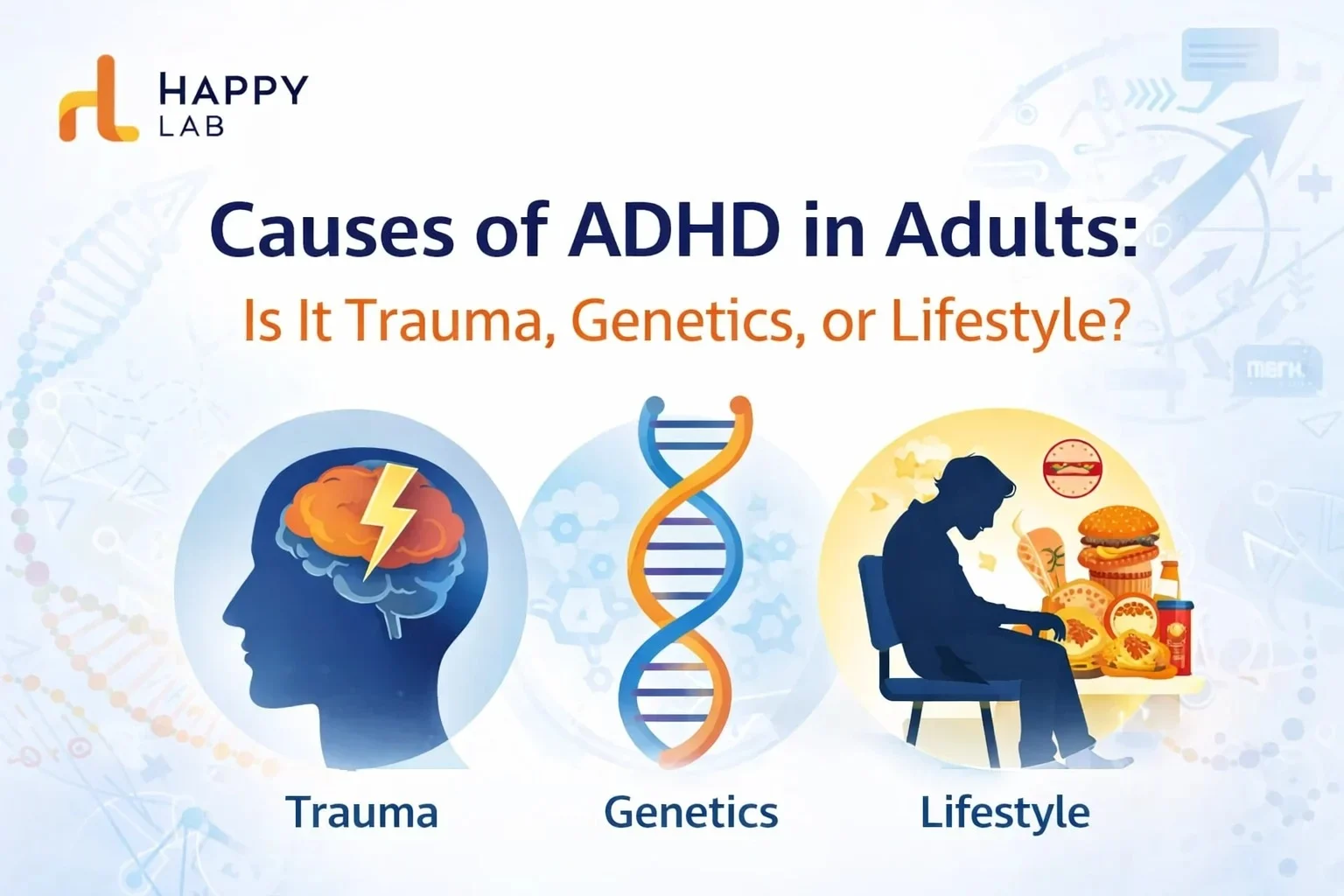
Causes of ADHD in Adults: Is It Trauma, Genetics, or Lifestyle?
Let’s be real for a moment.
Have you ever opened your laptop to work… and suddenly found yourself scrolling Instagram 20 minutes later? Or started five tasks but finished none? Or maybe you feel like your brain is always “on,” but somehow nothing gets done.
If that sounds familiar, you might have wondered: Is something wrong with me?
Here’s the truth—nothing is “wrong” with you. Your brain might just be wired differently.
ADHD in adults is far more common than most people think. The surprising part? Many people don’t even know they have it. They just assume they’re bad at managing time, lazy, or easily distracted.
But ADHD is not a personality flaw—it’s a neurological pattern. And when you understand the causes of ADHD in adults, things finally start to make sense.
In this article, we’re going to break it down in a simple, honest way—no complicated jargon, no textbook definitions. Just real explanations about adhd symptoms, what actually causes them, and how you can take control of your life again.
What ADHD in Adults Really Looks Like
When most people think of ADHD, they imagine a hyperactive child running around a classroom.
But adult ADHD? It’s much quieter—and much more internal.
It looks like:
- Sitting still, but your thoughts are racing
- Wanting to focus, but your mind keeps drifting
- Feeling overwhelmed by simple tasks
It’s like having a browser with 50 tabs open… and you don’t know where the music is coming from.
ADHD Symptoms That People Ignore
Let’s talk about adhd symptoms that often go unnoticed.
Common Signs You Shouldn’t Ignore:
Constant procrastination—even on important work
Forgetting small things (keys, tasks, messages)
Starting strong but losing interest quickly
Interrupting people without realizing
Feeling mentally exhausted without doing much
Many adults normalize these behaviors. But deep down, they feel stuck.
The Real Science Behind ADHD
ADHD is not about “lack of discipline.” It’s about how your brain processes information.
What’s Happening Internally:
Signals in the brain move differently
Attention control is inconsistent
Reward system works differently
This is why ADHD isn’t about not paying attention—it’s about not being able to control where your attention goes.
Genetics: Are You Born With ADHD?
One of the strongest causes of ADHD in adults is genetics.
Here’s the Simple Truth:
ADHD often runs in families
If one parent has it, chances increase
It’s linked to inherited brain patterns
Quick Breakdown:
Factor | Impact |
Family History | High influence |
Genetic Traits | Strong correlation |
Environment | Moderate influence |
So yes—you don’t “develop” ADHD randomly. For many people, it’s always been there.
Brain Chemistry & Dopamine Connection
Now let’s talk about something important—dopamine.
Dopamine is what makes you feel motivated, rewarded, and focused.
In ADHD:
Dopamine levels are lower
Brain seeks quick rewards
Long tasks feel boring or overwhelming
This is why:
You enjoy short videos more than long tasks
You struggle with consistency
You chase “instant satisfaction”
Think of it like this: your brain is always searching for a spark—but struggles to stay with slow-burning tasks.
Trauma and ADHD: The Hidden Link
This is where things get interesting.
Trauma doesn’t directly cause ADHD—but it can look exactly like it.
How Trauma Affects You:
Constant alertness
Difficulty focusing
Emotional instability
Comparison Table:
ADHD | Trauma Response |
Distractibility | Hypervigilance |
Impulsiveness | Emotional reactions |
Poor focus | Stress-driven attention issues |
This is why proper diagnosis matters.
Childhood Patterns That Shape ADHD
Your early life matters more than you think.
Factors That Influence ADHD Behavior:
Lack of structure
Emotional neglect
High pressure or criticism
These don’t cause ADHD—but they shape how it shows up.
Lifestyle Habits That Make ADHD Worse
Even if ADHD is genetic, your lifestyle can either help or harm.
Habits That Make It Worse:
No daily routine
Multitasking constantly
Skipping breaks
Overworking
Better Alternatives:
Time blocking
Focused work sessions
Clear priorities
The Role of Diet in ADHD
Even if ADHD is genetic, your lifestyle can either help or harm.
Habits That Make It Worse:
No daily routine
Multitasking constantly
Skipping breaks
Overworking
Better Alternatives:
Time blocking
Focused work sessions
Clear priorities
The Role of Diet in ADHD
Food affects your brain more than you think.
Avoid:
Sugary snacks
Processed junk
Energy drinks
Include:
Protein-rich foods
Nuts and seeds
Omega-3 sources
Simple Table:
Good Foods | Bad Foods |
Eggs | Sugary drinks |
Fish | Fast food |
Nuts | Packaged snacks |
Social Media, Dopamine & Focus Loss
Let’s be honest—we’re all addicted to our phones.
But for someone with ADHD, it’s worse.
Why?
Instant rewards = dopamine spikes
Brain gets used to fast content
Long attention becomes difficult
This rewires your focus patterns over time.
Sleep Problems and ADHD
Sleep is often ignored—but it’s crucial.
Common Issues:
Late-night overthinking
Irregular sleep cycle
Morning fatigue
Impact:
Worse concentration
Mood swings
Low productivity
Stress, Burnout & ADHD Overlap
Stress doesn’t cause ADHD—but it amplifies it.
When Stress Builds Up:
Focus drops
Emotions increase
Motivation disappears
This creates a loop:
Stress → ADHD symptoms → More stress
ADHD vs Anxiety: The Confusion
Many people ask:
“Do I have ADHD or anxiety?”
Quick Difference:
ADHD | Anxiety |
Distracted mind | Overthinking mind |
Impulsive | Fear-driven |
Task avoidance | Fear avoidance |
But both can exist together.
Real-Life Impact of ADHD in Adults
ADHD affects more than just focus.
Areas Impacted:
Career growth
Relationships
Financial stability
Self-esteem
Many people feel like they’re underachieving—despite being capable.
Treatment, Therapy & Recovery Path
Here’s the good news: ADHD is manageable.
Treatment Options:
Therapy
Medication
Routine building
Coaching
Why Therapy Matters (Happy Lab – Counselling Therapy in India)
This is where real transformation begins.
Happy Lab – best therapist in bangalore focuses on:
- Understanding your unique ADHD patterns
- Identifying root causes (trauma, habits, mindset)
- Building practical systems for daily life
What Makes It Different:
- Personalized sessions
- Real-life strategies (not theory)
- Emotional and behavioral support
It’s not about “fixing” you—it’s about helping you function at your best.
Conclusion
Understanding the causes of ADHD in adults is like finally getting the instruction manual for your brain.
You start to realize:
- You’re not lazy
- You’re not broken
- You just process things differently
Key Takeaways:
- ADHD Comes From Multiple Factors
- Genetics plays a major role
- Brain chemistry affects focus
- Trauma can mimic symptoms
- Lifestyle Can Make It Better or Worse
- Sleep, diet, and routine matter
- Digital habits impact attention
- Stress amplifies symptoms
- ADHD Affects Daily Life Deeply
- Productivity challenges
- Emotional struggles
- Relationship issues
Action Plan (Simple & Practical):
- Step 1: Identify your patterns
- Step 2: Reduce distractions
- Step 3: Build small routines
- Step 4: Improve sleep & diet
- Step 5: Seek professional help
Why Choose Happy Lab?
Feature | Benefit |
Personalized Therapy | Tailored ADHD solutions |
Expert Counsellors | Professional guidance |
Practical Techniques | Real-life improvement |
Emotional Support | Better mental clarity |
If you’re serious about improving your focus, productivity, and mental clarity, Happy Lab – online mental health counseling in India can be your starting point.
Also Read : Struggling Mentally? Try Online Therapy Today | Happy Lab
FAQ'S
What are the main causes of ADHD in adults?
The main causes include genetics, brain chemistry imbalance, and environmental influences like lifestyle and trauma.
Can lifestyle alone cause ADHD?
No, but lifestyle factors can significantly worsen symptoms.
What are early ADHD symptoms in adults?
Common symptoms include lack of focus, procrastination, forgetfulness, and impulsive behavior.
Is therapy effective for ADHD?
Yes, therapy helps improve focus, emotional control, and daily functioning.
Where can I get ADHD therapy in India?
You can consider Happy Lab – counselling therapy in India, known for personalized and effective therapy solutions.